A Dangerous Beauty: Mark Allen & Tricia Aurand on JFK, the Mob and Judith Exner
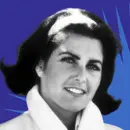


“President Kennedy and Bobby Kennedy were, in fact, working with the CIA to kill Castro. The CIA wasn’t plotting behind the Kennedys’ back.” — Mark Allen
A few days ago we had the presidential crisis historian Michael Dobbs on the show talking about the thirteen days in 1962 when John F. Kennedy saved the world from nuclear annihilation. That was him at his best, the Kennedy we want to remember. Today we have the JFK we want to forget. The one who was passing envelopes to the Chicago Outfit via Judith Exner, a twenty-six-year-old girlfriend, while his brother was busy putting mobsters in prison.
Mark Allen, a retired Department of Homeland Security attorney, knew Exner. He flew out to California in 1991 to get the rest of the JFK story from her. She told him that she carried not only messages but money between Kennedy and the Chicago mob boss Sam Giancana, beginning before the 1960 election.
All this is in A Dangerous Beauty, a new book Allen has written with the Los Angeles writer Tricia Aurand. Frank Sinatra introduced Exner to both Jack Kennedy and Sam Giancana — JFK at the Sands in February 1960, Giancana at the Fontainebleau a few weeks later. Nobody disputes Exner’s familiarity with either man. It’s the envelopes that historians have spent fifty years trying to decipher. Especially given all the conspiracy theories about the interconnectedness of the Kennedys, the mob, the CIA, Castro and Dallas.
The twist in A Dangerous Beauty is not what we expect from a book about JFK’s tangled relations with a beautiful young woman. If Exner was telling the truth, Allen and Aurand argue, then the Kennedys knew exactly what the CIA was doing to Castro, because they themselves were running the operation. Which destroys the premise underneath every rogue-agency theory of Dallas. So Allen and Aurand are anti-conspiracy theorists. The CIA, they suggest, probably wasn’t behind the 1963 assassination.
Allen is agnostic on who shot the president. What he wants to demolish is the idea that JFK was betrayed and even murdered by his own government. A conspiracy theory that, he warns, is being peddled today by, of all people, Robert F. Kennedy Jr.
FURTHER READING
• A Dangerous Beauty: The Kennedys, the Mob, the FBI, and Judith Exner, the Woman Who Linked Them All (Post Hill Press), with a foreword by Patt Morrison.
• The Church Committee investigated CIA assassination plots in 1975. Exner testified that September, three months after Giancana was shot dead in his basement.
• Seymour Hersh, The Dark Side of Camelot (1997), gave Exner’s courier account a chapter and broad acceptance. It changed few minds.
• Maureen Callahan, Ask Not: The Kennedys and the Women They Destroyed, is the recent bestseller on the wider pattern.
• Mark Allen, “RFK Jr.’s conspiracy theories do a disservice to his father,” Sarasota Herald-Tribune, 7 July 2023 — his dismantling of the three stories RFK Jr. tells about his father and the CIA.
ABOUT THE GUESTS
Mark Allen is a retired Department of Homeland Security attorney and a longtime student of the Kennedy presidency. He came to the subject through the JFK assassination and interviewed Judith Exner in the last years of her life, after Anthony Summers made the introduction. He lives in Sarasota, Florida. Tricia Aurand is a writer and screenwriter in Los Angeles. A Dangerous Beauty is published by Post Hill Press, with a foreword by Patt Morrison.
ABOUT KEEN ON AMERICA
Nobody asks more awkward questions than the Anglo-American writer and filmmaker Andrew Keen. With 3,000 episodes since the show launched on TechCrunch in 2010, Keen On America is a daily conversation about the ideas, books and arguments shaping the United States. New episodes every day.
00:00 - Intro
00:31 - From Michael Dobbs and the missile crisis to a different JFK
02:32 - How Mark Allen found Judith Exner, through Anthony Summers and Liz Smith
03:30 - The rest of the story: money as well as messages
04:04 - Did Tricia Aurand need convincing?
04:45 - Why the mob half of the story keeps getting dismissed
05:33 - How consistent was Exner’s own account?
06:06 - The Church Committee, 1975, and why she held back
07:22 - Sam Giancana, shot dead that June
07:42 - The suit too good to hide a gun
08:07 - Handsome Johnny Roselli
08:32 - What does “go-between” actually mean?
09:07 - Kennedy wanted to know, and wanted deniability
10:18 - Does carrying envelopes make her a minor player?
10:48 - Introduced by Sinatra, and it all felt natural
12:20 - Where was Bobby? Operation Mongoose and the attorney general
13:23 - RFK’s hand on her shoulder, and the tight turnaround
14:13 - Is this a smoking gun, and what is the crime?
14:39 - The consensus that you cannot believe Judith Exner
15:30 - Why the story damages the rogue-CIA theory
16:19 - Bobby’s first call after Dallas
16:52 - J. Edgar Hoover enters
17:11 - The Las Vegas wiretap, the March 1962 lunch, and years of harassment
18:28 - Was she special to Kennedy, or useful?
18:59 - March 1960 into 1962: two and a half years
19:47 - The Kennedys and women, an ongoing disappointment
21:03 - Callous even by his standards
21:33 - Twenty-six years old, and the danger he put her in
22:00 - “Sam Giancana works for us”
22:47 - Summoned to Washington on a whim
23:28 - How she met Sinatra at Puccini’s in 1959
24:18 - Why it soured
24:45 - Nobody forced her — and she was in love with him
25:30 - The Sands, February 1960, and the Summit show
26:06 - The Fontainebleau, Giancana, and the hotel where the plotting happened
26:45 - How was she supporting herself?
26:55 - Pacific Palisades, William Campbell, and family money
28:00 - So what does this tell us about Dallas?
28:41 - Agnostic on the theories, drawn to mafia and Castro
29:30 - Oswald in Mexico City, and the missing link
30:44 - Concluding on a negative
31:22 - Why the mafia’s resentment makes her credible
31:57 - Is anyone else making this argument?
33:10 - Seymour Hersh and The Dark Side of Camelot
33:36 - Joe Kennedy, Prohibition and the bootleggers
35:35 - If the mob did it, why kill their own back channel?
36:23 - Ultimately, who cares?
37:04 - Shouted down because she was a woman
38:39 - Does a book like this feed the conspiracy foment?
39:23 - RFK Jr., and what over-adulation produced
41:29 - Closing
00:00:31 Andrew Keen: Hello, everybody. A few days ago, we did a show with the Washington-based journalist, Michael Dobbs, formerly a Washington Post reporter both in Moscow and in Washington DC. He's a presidential crisis historian. His new book is called The Six Minute War, but he's best known perhaps for One Minute to Midnight: Khrushchev— Kennedy, Khrushchev, and Castro on the Brink of Nuclear War, on the Cuban Missile Crisis, probably the most authoritative book on the subject, which I think shows, John F. Kennedy at his very best, at his most diplomatic. But, of course, JFK is a more controversial figure. And today, rather than talking about Castro and Khrushchev and the missile crisis, we're talking about a very different kind of JFK, his relationship with a woman called Judith Exner. There's a new book out, came out a few days ago, A Dangerous Beauty: The Kennedys, the Mob, the FBI, and Judith Exner, the Woman Who Linked to Them All [as spoken]. Very, ambitious subtitle. Not the first or probably the last of these kind of books about JFK and his administration written by, two authors, Mark Allen, who's had a lifetime interest, in this subject. He actually knew Judith Exner and Tricia Aurand, the Los Angeles-based screenwriter and writer. And I'm joined by both, as I said, Tricia from Los Angeles and Mark from Sarasota in Florida. Mark, let's start with you. You have a, as I suggested in the introduction, a long-term interest in Exner. Tell me about this woman. How did you know her, and why is her story, in your view, worth a book?
00:02:32 Mark Allen: So, I started off, on this subject, researching the assassination of John F. Kennedy. That's how I got into this field. Sometime back in the late— early 1990s, I was talking with a fellow researcher and author, Anthony Summers, who's written a number of books with his wife, Robbyn Swan, and both Tony and I believed that we had not heard Judith Exner's story in completion. In other words, we thought that she still had plenty to say even in 1991. And so, I basically, we tried to reach her. Eventually, we did through the columnist Liz Smith. And so, I flew out to California to talk to her to kind of get the rest of the story. And that story happened to be that in addition to, being the go-between to Sam Giancana and President Kennedy and carrying messages, related to the CIA-mafia plots. She had also carried money in between Giancana and Kennedy in the 1960 election. That's a lot, it's a mouthful, but basically that's how I got into the story through the JFK assassination, through Anthony Summers, who provided me the entree to Judith Exner.
00:04:04 Andrew Keen: I think Tricia, did you— I know you've known Mark a while. You've worked on other projects. Did you need some convincing here? I mean, as I said, this is not the first or the last book about Kennedy and his women. In fact, there was a bestseller from last year, which covers all the, Kennedy women. It's called Ask Not: The Kennedys and the Women They Destroyed, and there were many of them. Did you need convincing here? Because there've been many rumors about JFK's death, his association with the mafia, Marilyn Monroe, Frank Sinatra. You know all these rumors. Did you need convincing [as spoken: here]?
00:04:45 Tricia Aurand: Actually, not very much convincing. I agreed with Mark that the public perception of Judith Exner, is not what it should be. For those that have heard of her at all, there's sort of this, discounting or sort of dismissal of the mafia angle part of her story. You know, historians generally agree she had a personal relationship with JFK. There's a lot of evidence that supports that. But they've always sort of questioned that side of her story. And to me, that side of her story that she acted as a courier between Kennedy and the mob is the much more important side of the story. And I didn't feel that had been told in its entirety. And in fact, a lot of people in my generation had never heard of her at all. So I thought it was tremendously important that we read this book.
00:05:33 Andrew Keen: Mark, did Exner over her life— And as you noted in the introduction, you spent a little bit of time with her. You knew her for a while at the end of her life. Did she change her story? How consistent was her narrative? I know she gave interviews. She wrote a book. She appeared at the Church commission [as spoken: Church Committee], the 1975 commission. So how consistent was her own narrative on her involvement with JFK and these connections with the mob and its implications for the assassination in Dallas?
00:06:06 Mark Allen: So, in the beginning, she held back. There's no question about that. And there was a very good reason that she did that. When she was summoned before the Senate Committee in 1975, was known as the Church Committee. It was investigating CIA abuses, and particularly it was investigating the CIA plotting with the mafia to kill Fidel Castro. And the Church Committee staffers suspected that she was a go-between between President Kennedy and Sam Giancana and Johnny Roselli. The reason they suspected that is they came across FBI documents that showed that this then Judith Campbell was in touch with Roselli and Giancana at the same time. When she was summoned before the committee to ask whether she was a go-between, there were a number of reasons why she didn't tell the truth. She held back. One, Sam Giancana, who she carried the messages to, had just been killed, only in the end of June, I believe. And she was testifying in September of that month [as spoken: year].
00:07:22 Andrew Keen: Yeah. His life ended in June 1975. He's described, at least by Wikipedia, as an American mobster who was boss of the Chicago outfit from 1957 to '66. And in the Wikipedia page, he's wearing quite an outfit himself, a very nice little hat and beautiful suit.
00:07:42 Mark Allen: No. He dressed very nicely too, Judith would say. But, matter of fact, if I can detour a little bit, she pointed out to me that he couldn't have worn a gun because his suit was too nice. But Sam Giancana and Johnny Roselli, were working with the CIA to kill Castro.
00:08:07 Andrew Keen: And Johnny, John Roselli, who's sometimes known as Johnny, they called him Handsome Johnny, although I don't think he's much better looking in my view. What do I know about male looks than Sam?
00:08:20 Mark Allen: Well, I guess you had to see him in person. There's a picture of him in our book. He looks pretty good. That's kind of a younger, undistinguished Johnny Roselli, I would say.
00:08:32 Andrew Keen: Well, we know. Let's remind ourselves that then, we'll call him handsome Johnny and, elegant Sam, maybe, because elegant Sam looked very good. So just to jump in here, I mean, I don't wanna trivialize what you're arguing. What does a go-between mean? Are you suggesting that, Judith Exner, there's no doubt, you're not the first or last person to write about her, sexual relationship with JFK. What was she doing? Passing messages backwards and forwards? What did it mean to be a go-between?
00:09:07 Mark Allen: That's exactly what she was doing. She was taking what she was told was intelligence material between, Jack Kennedy and Johnny Roselli and Sam Giancana, mostly Sam Giancana. And the reason for that is that the CIA was plotting with Sam Giancana to kill Castro. And President Kennedy wanted to keep track of those plots. He wanted to know what was happening, but he didn't want anyone to know or very few people to know, that he knew about the plotting because that would compromise him. Back then, it was shocking the idea that the president of the United States would be involved in a murder plot involving a foreign leader and particularly working with the mafia. But President Kennedy was okay with that, but he wanted to know what was going on. And so that was why he used Judith as a go-between, and that's why— How he got information on how the plotting was proceeding.
00:10:18 Andrew Keen: So this was, Tricia, this was pre-email. I mean, does I wanna get into the credibility of that in itself, but what does this tell us about Exner? I mean, she's a— Makes her a very marginal player in all this. The fact that she was just handing, supposedly, at least in your theory, handing messages that Kennedy wanted given to the mafia. So what?
00:10:48 Tricia Aurand: I mean, first of all, I don't think it makes her a minor player at all. I think if, she hadn't been doing that work as a courier, I'm not sure anyone else necessarily would have. And she was the only person who directly implicated Kennedy, and RFK as not only having known about the plots, but having been overseeing the plots. She was a firsthand witness to a very important piece of history. And I think, you know, in Judith's mind, this was very much a social arrangement. I don't think she necessarily saw herself, at least initially, as doing some, you know, clandestine CIA subterfuge or something like that. To her, it seemed very simple. When she was initially approached by Kennedy, it was to carry some money to Giancana related to the 1960 presidential campaign. It was back, you know, before the election in 1960. And she'd been introduced to both JFK and Giancana by Frank Sinatra. And so to her, she knew Sinatra was helping Kennedy with his campaign. She knew that Sam Flood, as he was introduced to her at a party, was also a friend of Sinatra's. And it all just seemed very natural to her that she would help out with the campaign in this way. And then Kennedy just kept asking her to carry envelopes and carry, messages throughout, the first couple years of his presidency.
00:12:20 Andrew Keen: I'm curious. You brought up Bobby Kennedy, who was the attorney general and, very close associate, of course, of his brother. He was very much involved in this assassination. I don't know if it's a plot, an assassination, or a policy in terms of dealing with Castro after the Bay of Pigs.
00:12:41 Mark Allen: Sure.
00:12:43 Andrew Keen: But on the other hand, of course, Bobby Kennedy famously, and I've read this in several biographies of Bobby, he made it clear to his brother that he shouldn't associate with Frank Sinatra because of his associations with the mob. And it strikes me from your narrative that Bobby would have been much more involved on the front lines. What was it called? Operation Mongoose? Or—
00:13:09 Tricia Aurand: Mhmm.
00:13:09 Andrew Keen: He would— He was in charge of that. So if any— If what you're claiming is true, wouldn't these notes and this money have come from Bobby himself rather than implicating the president?
00:13:23 Mark Allen: Well, it was the president who gave, the information to Judith, but Bobby Kennedy was there. He probably was the source for a great deal of the information that was being provided.
00:13:34 Tricia Aurand: And Judith mentioned having met, Bobby Kennedy, you know, through JFK, through her relationship with Kennedy. In private quarters, when messages were being handed over, sometimes the messages were coming from both of them. Sometimes they were looking through them. She described an incident which we, mentioned in the book where RFK put his hand on her shoulder and said, you know, something like, sorry about the tight turnaround, but we really need this information if you can carry it and bring it back. Are you still okay with doing this? That kind of concern for her. And she remembered at the time that she appreciated that. But, yeah, she— Obviously, RFK was involved and knew what was going on as well.
00:14:13 Andrew Keen: So why is this a big deal? I mean, if indeed they— There's been lots of books also on the association, certainly of Bobby Kennedy, but also the Kennedys in general with the mafia. Why is this— Is this some sort of— In your analysis, in terms of the book, A Dangerous Beauty, is this a smoking gun? And if it is, what crime are we being told of?
00:14:39 Mark Allen: What I would say is that there's been a lot written about the subject, but what we've seen is a, at least a partial consensus that you can't believe Judith Exner. Her story isn't true. You might be able to believe that part about her having an affair with Kennedy, but, we can't trust anything else. And what this book, I think, shows is that it is true. Now, if it was accepted as universally true, we would know that President Kennedy and Bobby Kennedy were in fact, okay with the CIA plots against Fidel Castro, even ones using the mafia. But what we have now is a body of literature that suggests that the Kennedys didn't even know about these plots, even though Bobby Kennedy was heading Mongoose— that the Kennedys were unaware that the CIA was plotting the assassination of a foreign leader behind their back. Okay? And this is the cornerstone of a lot of theories, that the CIA, in fact, was involved in killing President Kennedy, that we had the evil CIA, that it was doing these terrible things behind the Kennedys' back. So, you know, Judith Exner's story, shoots a big hole in the CIA kill President Kennedy theory, because the CIA was doing what the Kennedys wanted. They weren't doing terrible things behind their back.
00:16:19 Andrew Keen: Yeah. And it's interesting. I think— I mean, I know you know this stuff a million times better than maybe the first person that Bobby Kennedy called after he heard about the assassination of his brother was the head of the CIA and asked him directly if the CIA was involved. Judith—
00:16:37 Mark Allen: Well— okay.
00:16:38 Andrew Keen: I called you Judith, Tricia. That was a terrible error. Tricia, what about our old friend, J. Edgar Hoover, who seemed to know everything about everyone back then? He, of course, ran the FBI. They were in competition with the CIA.
00:16:52 Tricia Aurand: Mhmm.
00:16:52 Andrew Keen: Does he pop up? He seems to come up in all these books of one kind or another, the recent book, about, Bobby Kennedy's friend, Roy Cohn, J. Edgar Hoover comes up extensively. Is he involved in your narrative? Did— I assume he knew all about Judith Exner.
00:17:11 Tricia Aurand: Sure. And yes, he does. There was an incident in Las Vegas with wiretapping and Giancana that ended up alerting, actually both the CIA, but also the FBI about Judith Exner, that she was both in touch with President Kennedy and that she was in touch with Sam Giancana. And immediately, this raised red flags for Hoover. And so there is— Was a situation in— On March 22, in 1962 when he, you know, Hoover met with JFK and brought up Judith and, you know, seemed to imply, that Kennedy was making very dangerous moves in being involved with Judith. And so he also— Hoover then went on to order a rigorous investigation of Judith. And for years, she was hounded relentlessly by FBI agents. She was harassed relentlessly, almost to the point of driving her to end her own life. And so the FBI, Hoover himself, sort of plays a tertiary role, but the FBI under his direction plays a huge role in Judith's story.
00:18:28 Andrew Keen: Mark, again, it's not news that JFK liked the ladies much too much and had many, many affairs with many different women in his life. Why is the ex— Is the Exner thing interesting because of her ability to pass envelopes between JFK and mafia bosses, or is he— Or was she in Kennedy's mind a special friend? Did— How long was their sexual relationship?
00:18:59 Mark Allen: It actually lasted from March 1960, well into 1962. I think they were, an item, I would say, probably for about two and a half years. So, it went on for a long time. People can look at that in two different ways. They could say he must have been very special to her to have had that relationship for so long. Then, a more cynical view would be that, she must have been useful to him to be having this relationship for so long. But, I do think she had a more sustained relationship, than certainly, the great majority of Kennedy's girlfriends.
00:19:47 Andrew Keen: No. That's a euphemism, sustained relationship. He was, of course, married to Jackie Kennedy. In terms of writing this book, Tricia, we— Before we went live, I asked, I think I asked Mark how you wanna divide your labor, and he specifically said that any questions about women in JFK should be directed to you. Were you shocked, so to speak, borrowing language from Casablanca about all this? Presumably, you knew about it. You live in LA. You screenwrite. So is there something exceptional about this— The Kennedy treatment of the— Of women? I mean, I'm sure you've read, Maureen Callahan's Ask Not: The Kennedys and the Women They Destroyed. Is there something particularly troubling about the indifference of the Kennedys, particularly JFK, towards, the women that he sexually, used one way or the other?
00:20:50 Tricia Aurand: I mean, I think so. I can't say that I was surprised by it, but, the Kennedys' behavior in regards to women remains an ongoing disappointment.
00:20:59 Andrew Keen: Yeah. Not a euphemism disappointment.
00:21:03 Tricia Aurand: I do think that, you know, he had a reputation as a playboy. Judith knew that, and I think probably a lot of the women that were involved with him knew about his reputation. Even Jackie knew very well about it, but I do think there was something particularly callous about his treatment of women. And especially in Judith's case, he was actually putting her in a tremendous amount of danger and didn't seem to care at all about that. They're really—
00:21:33 Andrew Keen: You mean in terms of the— These passing of notes?
00:21:36 Tricia Aurand: Yes. Yeah. Absolutely. He was asking her— Keep in mind, Judith was 26 years old. Kennedy was much older than she was and obviously the most powerful person in the country, possibly one of the most powerful people in the world. And he knew very well the risks that he was putting her in both in terms of organized crime and again with the FBI. The FBI was horrible in their treatment of her. Anything could have happened to Judith as a result of what he was asking her to do. And Judith complained to him towards the end of their relationship a lot about how the FBI was treating her, and he was very dismissive of her concerns. He was saying, you know, nothing's going to happen to you. Sam Giancana works for us. You don't need to worry about this. And she— It was part of the reason that she ended up ending things with him. Their relationship soured because of his sort of lack of concern for her safety and his demands on her too. He would, you know, demand that she fly to DC at a moment's notice, not just for, this courier role that she was in, but also just because, you know, at a— On a whim of his, he would want her nearby. And other—
00:22:47 Andrew Keen: We can guess what. They weren't gonna discuss, Shakespeare, were they?
00:22:51 Tricia Aurand: I doubt it. But, there were other JFK mistresses that have come forward that have, you know, described this pattern of behavior of demand— Making demands on women's time, making demands of them sexually making, just like basically expecting that these women were at his beck and call. And Judith was certainly not the only one by a long shot. And some women did— At least one of his mistresses also relocated to Washington DC at his request. [unclear] So, it was just— It seems to Judith that he really was only focused on what he was getting out of that relationship.
00:23:28 Andrew Keen: Which is hardly surprising. I mean, sure. I don't think, again, you're the first or last people to say that. Mark, you knew Judith. How did she meet both these mafia bosses and JFK?
00:23:44 Mark Allen: Frank Sinatra, was the key figure there. So—
00:23:49 Andrew Keen: So what? He was passing her around? I mean, how did she know Sinatra then?
00:23:54 Mark Allen: Well, she met him, in 1959. He spotted her at his restaurant, Puccini's, and he showed an interest in dating her and, she assented. They had a brief relationship and, but it soured and, but they remained friends. And then—
00:24:18 Andrew Keen: What do you mean? What do you mean it soured?
00:24:20 Mark Allen: Well, they decided that they would not see each other exclusively. Now, we could go into a spicy tidbit about that. He did try to get her into a [unclear: ménage à trois], which she was not, not into. She was mortified by it.
00:24:37 Andrew Keen: Not with J. Edgar, I hope.
00:24:39 Mark Allen: No. And this—
00:24:40 Andrew Keen: I think J. Edgar was interested in other ménage à trois.
00:24:43 Mark Allen: Mhmm.
00:24:45 Andrew Keen: But, I mean, in all seriousness, Mark, I mean, I don't wanna cast aspersions on this woman. Obviously, she didn't have a great life and all the rest of it, but I mean, no one was forcing her to do any of this.
00:24:58 Mark Allen: No. She was a very young woman who was over her head with very powerful and influential men. And, she was also madly in love with, John F. Kennedy.
00:25:10 Andrew Keen: But how did— So she met Frank. They had a brief affair, then Frank didn't wanna commit. So then Frank introduced her to—
00:25:20 Mark Allen: To John F. Kennedy.
00:25:22 Andrew Keen: First, before him— Before Giancana and Roselli.
00:25:29 Mark Allen: That's correct.
00:25:30 Andrew Keen: But he introduced them to both?
00:25:33 Mark Allen: He introduced— Yes. He entered— First, he introduced her to Kennedy at the Sands Hotel in Las Vegas in February 1960. He was putting on a very famous show, it was called the Summit show, where he had all the top performers in show business like Sammy Davis Jr., Joey Bishop, Dean Martin, and Peter Lawford, by the way, was president—
00:26:02 Andrew Keen: His brother-in-law, ex— Yeah. JFK's brother-in-law.
00:26:06 Mark Allen: So, Sinatra took that show on the road to the Fontainebleau Hotel in Miami Beach. Judith, was already in New York. So, she also accepted his invitation to go to his show in the Fontainebleau. And at the closing party for that show, Frank Sinatra introduced her to Sam Giancana. The Fontainebleau Hotel was a hotel that, Giancana frequented. And it turns out, matter of fact, that the CIA-mafia plotting occurred at that hotel.
00:26:45 Andrew Keen: So how was she supporting? Was Frank or Sam, were they all giving him [as spoken: her] stipends? How was she supporting herself?
00:26:53 Mark Allen: She had family money.
00:26:55 Tricia Aurand: Yeah. Judith grew up in Hollywood sort of social circles. She grew up in Pacific Palisades. Her sister was an actress. Her father was an architect and, they just sort of knew people and that were wealthy and influential in Los Angeles. She— Her first husband was an actor, William Campbell, whom she married when she was 18 years old, and then split up with him, a few years later. But she just kind of knew showbiz people. She had— She was a very natural beauty and also had talents for painting, for singing. She could have had a career in show business if she wished, but honestly, Judith was a little bit more introverted than her sister. She didn't really have an interest in pursuing a career and she came from a wealthy family as we said. And her first husband, you know, was forced to pay her some alimony and so, some support and she just— She really didn't need to work very much. She just wanted to follow her heart, and so that was how she ended up involved with, JFK.
00:28:00 Andrew Keen: So in many ways, this is not particularly— At least in my mind, it's not particularly interesting story with the exception. I mean, there were many women like Judith Exner who had affairs with famous people, movie stars, singers, presidents, other powerful political figures. Mark, as you said, the really interesting thing here is what you suggest about the assassination. What have you learned from researching and writing A Dangerous Beauty that help us understand who killed Kennedy in Dallas potentially?
00:28:41 Mark Allen: Actually, as I mentioned, my first background was in the JFK assassination. And over the years, I've pretty much became an agnostic on all theories relating to who killed JFK. Now, there are a couple of theories that interest me more than others, and they involve either mafia or Castro. And when you look at her story and you see that Kennedy is accepting, favors from the mob, working with the mob, while his brother is out there hammering the mob, you could see how they might be very unhappy with President Kennedy. Also, I think if you look at the Castro angle, I think it's fair to say that President Kennedy was trying to kill Castro. Now we have Lee Harvey Oswald, who is a pro-Castro activist, who visited the Cuban embassy in Mexico City only several weeks before the assassination. I think you see some very concerning, connections there. I just don't happen to think at this point in time that there is enough evidence, linking Lee Harvey Oswald to the mafia or Castro or any other organization to conclude, that the Warren Commission's finding was wrong that Lee Harvey Oswald acted alone. But that's as we sit here today. I would just would like to, you know, there just isn't, if you're going to say that an organization conspired to kill President Kennedy, you have to link him to Lee Harvey Oswald. He is the only real suspect as the gunman in the case. And I just haven't seen those connections.
00:30:44 Andrew Keen: So, what you're saying then, in A Dangerous Beauty, this book about, Judith Exner, the— What you conclude is almost in terms of the JFK assassination is you conclude on a negative assumption, so to speak, that you're convinced that this story, this chapter in— Of JFK's life convinced us that the CIA wasn't behind the assassination. Is that fair, Tricia, in terms of the message in the book about the assassination?
00:31:22 Tricia Aurand: I think that, you know, the resentment that Mark is describing coming from the mafia was palpable. I think that, you know, regardless of what you think about the assassination and as Mark was saying Lee Harvey Oswald's connections, I do think that one of the most compelling reasons that I believe Judith is because the mafia's resentment toward the Kennedys is very well documented.
00:31:49 Andrew Keen: When you say— Sorry. I'm jumping in here. When you say believe Judith on what?
00:31:53 Tricia Aurand: That she carried money and messages between Kennedy and the mob. Yeah.
00:31:57 Andrew Keen: I mean, that— That's— yeah. Are you the first— By the way, are you the first people to actually argue there?
00:32:03 Tricia Aurand: I think some people have argued— Other journalists, have argued that, you know, and based on evidence that has been collected that she was telling the truth about that. I think that so far, there has not been the historical reckoning with her story that I think there needs to be. That we accept this as being true, that there is enough evidence that supports that part of her story to say that this happened.
00:32:29 Andrew Keen: You say historical destiny. What does that mean?
00:32:31 Tricia Aurand: Oh, I just said historical reckoning. I think that—
00:32:35 Andrew Keen: More— I mean, I don't think anyone—
00:32:37 Tricia Aurand: Sure.
00:32:37 Andrew Keen: Would be that support. Certainly, no one would be surprised with JFK's relationship with Exner.
00:32:42 Tricia Aurand: Sure.
00:32:43 Andrew Keen: And the fact that he was maybe conspiring with the mafia to assassinate Castro, passing messages or money backwards and forwards, is— Have other people made that observation? Have they claimed that?
00:32:58 Tricia Aurand: Claimed that she was not telling the truth about carrying— Acting as a courier?
00:33:03 Andrew Keen: Well, no. That these things were true, that she was indeed ferrying messages and money between the two.
00:33:10 Mark Allen: So Seymour Hersh's book, The Dark Side of Camelot, that came out in 1997.
00:33:17 Andrew Keen: Yeah.
00:33:18 Mark Allen: I think it's fair to say, basically accepted her account of that. It didn't, it was a big book. This was just one chapter in it. I don't think it had a particularly big impact on, how others have viewed her story since then.
00:33:36 Andrew Keen: So you're supporting the Sy Hersh argument about, Exner as the go-between. Tricia, Mark brought up the fact that on the one hand, JFK had this mafia-associated girlfriend. On the other hand, Bobby Kennedy himself was, of course, a famous anti-mafia attorney general, associated with all sorts of attempts to put, bosses in jail. What about Joe Kennedy? What about his place here? Because there's been lots of rumors about his— He wasn't very happy with Bobby Kennedy when he decided to go after the mob.
00:34:18 Tricia Aurand: Sure.
00:34:20 Andrew Keen: What does the Kennedy family history of its relations or potential relations with the mob tell us about this book?
00:34:29 Tricia Aurand: I'm actually gonna let Mark handle this one.
00:34:31 Andrew Keen: Okay. Mark?
00:34:32 Tricia Aurand: He has some insight here.
00:34:34 Mark Allen: Yeah. So, [unclear], I think most people who've studied the Kennedys are familiar with the stories of Joe Kennedy and Prohibition and working with, criminal elements, to make money in the bootlegging business. The evidence on that isn't as solid as I would like it to be, but I think it's fair to note that two mobsters, during their lifetimes did make that allegation, that they worked with Joe Kennedy, in bootlegging operations. And I suspect all the dealings that Joe Kennedy had in the city of Chicago, that he must have rubbed a lot of elbows with shady types. So, I do believe his father, probably himself had dealings with organized crime figures during his lifetime.
00:35:35 Andrew Keen: And, Mark, why would— I mean, if indeed the mafia was involved in the assassination of JFK, why would they wanna get rid of him given that they had these back channels? Presumably, they didn't have back channels with all presidents. They certainly didn't with Eisenhower.
00:35:55 Mark Allen: Well, they weren't helping them at all. That would be the theory. As I told you, I'm an agnostic on that theory, but it wouldn't have been— Yes, they made the connections. Yes, they made the donation, as Giancana called it once, to Kennedy's campaign. But, they were getting nothing but grief for it. They were being betrayed, being double-crossed. That would be the theory.
00:36:23 Andrew Keen: And the Kennedys, of course, were very good at that sort of thing. And, finally, you— I mean, it's a fascinating story, a remarkable chapter in the history of the United States and of the Kennedy presidency. But I'm still not convinced why this really matters. Maybe we'll end with the two of you. Tricia, you might begin. Why does this— Why should— I mean, the book is interesting. I've been browsing it, and it's very well written, very well researched. But, ultimately, who cares? Maybe you can end by convincing our viewers and readers that they should read a book like this, that it still matters.
00:37:04 Tricia Aurand: I mean, for me, the most important thing or the thing that I keep taking away from this story is what else don't we know? People have dismissed Judith's story. She's had lived this complete life and a good portion of it was so close to the apex of power in this country. She was an eyewitness to history and she was an active player behind the scenes. She knew a lot and she could have revealed so much. And yet she was just shouted down because she was a woman. I mean there are a variety of reasons why people have given over the years about essentially why they just dismissed her story. In her lifetime though, the press really painted her in these sort of flattened sexist stereotypes, and just sort of shrugged their shoulders about everything that she had to say. And it turns out that it was all completely true and no one wanted to hear it. They just kinda stuck their fingers in their ears and yelled la la la and pretended that she wasn't saying it. And if we've done that to Judith Exner, who else have we done that to in history? Who else knows more that could tell us the truth about what's going on behind the scenes that we aren't listening to possibly for sexist reasons? And it just is haunting to me, I suppose, and also just tragic that it's taken this long to reevaluate what is ultimately at its heart and a very credible and important story.
00:38:39 Andrew Keen: Finally, Mark, with you, you're a longtime DC guy now living in Florida. We live in the age, of course, of conspiracy theories of one kind or another. Even the current American president seemed to be a conspiracy theorist. Are you concerned that this book might just add to this foment of conspiracy about America? I mean, your coauthor, Tricia, just noted if we accept this story as true, then how many other stories could be true? So many rumors about the Kennedys and future American presidents. Should we be a little careful about conspiracy theories as writers, as observers? [unclear]
00:39:23 Mark Allen: Actually, what I would like people to take away from the book was that President Kennedy and Bobby Kennedy were, in fact, working with the CIA to kill Castro. The CIA wasn't plotting behind the Kennedys' back. You have Bobby Kennedy Jr. now saying, “Definitely the CIA killed my uncle. I could prove it in court beyond a reasonable doubt,” which is an outrageous claim. And I think that it's important to understand that the institutions of government are not so untrustworthy and corrupt as they've been made out to be by this conspiracy theorizing that somehow we have one institution of government, one agency of government killing the president of the United States. That's something that I don't think should be encouraged. I think it's corrosive. I think it's dangerous. I think it's dangerous when you have, Bobby Kennedy Jr. saying it. And, you know, I would— I'm not trying to promote a distrust of government or conspiracies that show that we can't trust our institutions. It might not seem that way, you know, based on, the topic of the book, but that is really what I intend. I also think that the over-adulation of the Kennedys that have come from rejecting stories like Judith has led us to an RFK Jr., who's basically in his position because of his name and wouldn't be taken very seriously otherwise. So we need a more realistic view of Judith Exner and we need a more realistic view of the Kennedys to understand our history so we can benefit from it.
00:41:29 Andrew Keen: Mhmm. There we have it. A realistic view of the Kennedys, warts and all, especially warts. A Dangerous Beauty: The Kennedys, the Mob, the FBI, and Judith Exner, the Woman Who Linked Them All. The book is out by my two guests, Mark Allen and Tricia Aurand. Fascinating conversation. Congratulations, on the book, and I really like, Mark, your final remark on JFK, RFK Junior. I think that's a compelling argument. Thank you both.
00:41:57 Mark Allen: Thank you. Thank you.